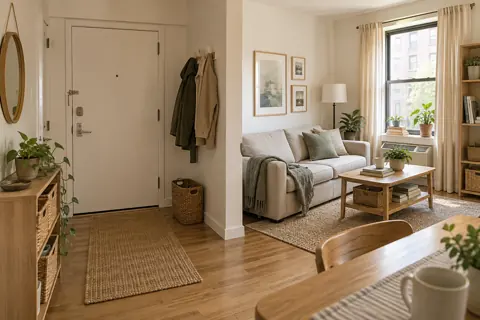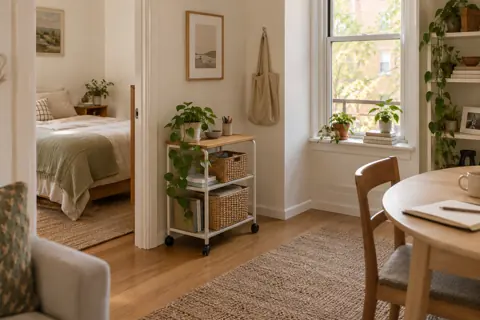
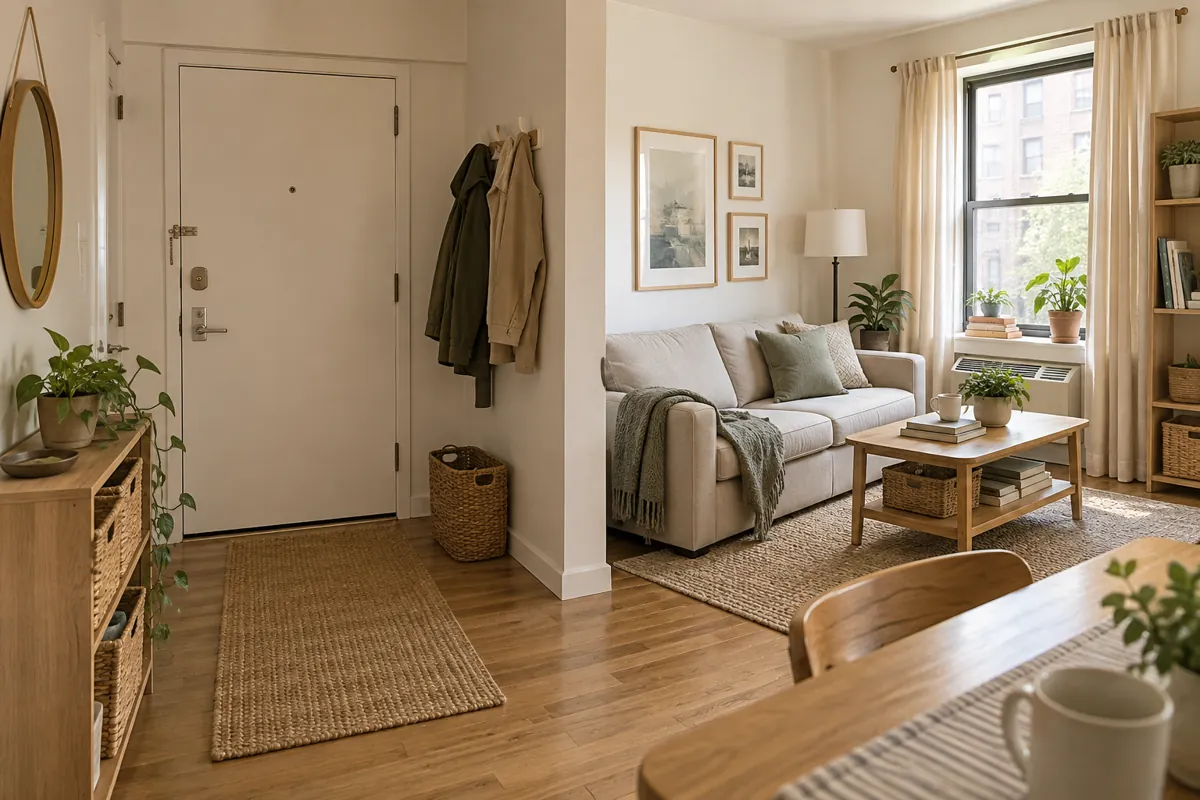
Check the space with doors open
Open the entrance door fully and check nearby closet doors and drawers. Notice where you stand while carrying bags or taking off a coat. Measure the narrowest part of the route, including projecting handles and baseboards. Do not assume a slim console will fit because it looks small in a photograph. Test the footprint temporarily, then remove the test object. Walk through as you normally would. Keep exits, access panels and required heating or equipment clearances unobstructed.
Read the measuring guide before adding storage to a narrow space.
Limit the shoes by the entrance
Keep the pairs currently in rotation near the door and store occasional shoes elsewhere. Let the available safe space determine the size of the shoe zone rather than trying to fit every season into it. A low tray can define the area if its edges do not create a trip hazard. Let footwear dry as appropriate for its material and conditions; hiding wet shoes in a closed box is not the same as organizing them. Clean the area regularly.
Use an existing surface for keys
A shallow tray or small bowl can work on an existing stable surface. Reserve it for everyday essentials instead of receipts and random packaging. If there is no appropriate surface, a nearby drawer may be better than buying furniture. Choose the location with your household's security in mind. Convenience does not mean leaving valuables where anyone approaching the doorway can reach them.
Store bags outside the walking route
Give the bag currently in use a home in a nearby closet or another suitable spot. A low container can work only where it does not narrow the route. Keep occasional bags elsewhere. Hooks and over-door organizers are optional. Check surface compatibility, load rating, lease restrictions and door clearance before using them. Follow installation instructions. Do not hang a loaded bag where it prevents a door from closing or creates a falling-object risk.
Separate incoming and outgoing items
Use one small place for papers requiring attention and a distinct place for items leaving the home. Sort incoming mail regularly and store sensitive paperwork securely. For a return or donation, decide the next action rather than just adding it to a basket. If the outgoing space fills, deal with its contents before adding another container. Large parcels should not wait in the exit route.
Choose furniture only after testing the routine
If furniture is still needed, compare its full dimensions, including feet and handles. Check how drawers or tilting shoe compartments open. Assess usable storage space rather than relying only on outside measurements. Follow all anchoring and stability instructions. A narrow cabinet may still need anchoring. If rental restrictions prevent proper installation, choose a different solution. Use furniture for sitting only when it is designed for that purpose.
Two simple arrangements
With a nearby closet, keep most shoes and coats inside it and reserve one existing shelf or drawer for keys. Let the closet provide storage while the entrance provides passage. If the entrance opens into the living area, try a small tray on existing furniture and a limited shoe zone outside the main route. Move the storage if a bin makes the room harder to cross. At the end of each day, return stray belongings to their homes. Review seasonal items when they stop being used. A useful entryway supports arrivals and departures; it does not need every type of entryway furniture.