
Choose storage that moves with you
| Option | Best for | Main check before use |
|---|---|---|
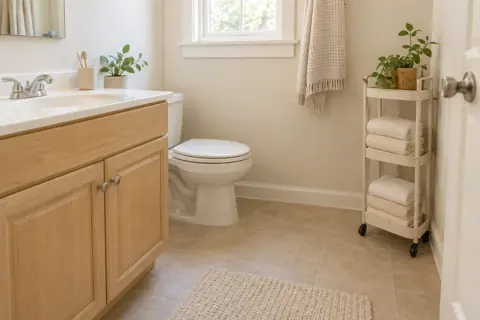
| Movable cart | Best for: Frequently used items in a small open space | Main check before use: Measure walking and door clearance; follow stability and load instructions. |
| Over-the-door | Best for: Light accessories and everyday essentials | Main check before use: Check hook thickness, door clearance, latching, and rated load. |
| Tension | Best for: Light items between compatible surfaces | Main check before use: Check the intended use, span, surface, and load rating. |
| Adhesive | Best for: Light items on approved surfaces | Main check before use: Check rental rules, surface compatibility, load and removal instructions. |
| Suction | Best for: Light items on smooth nonporous surfaces | Main check before use: Check surface compatibility, attachment and rated load regularly. |
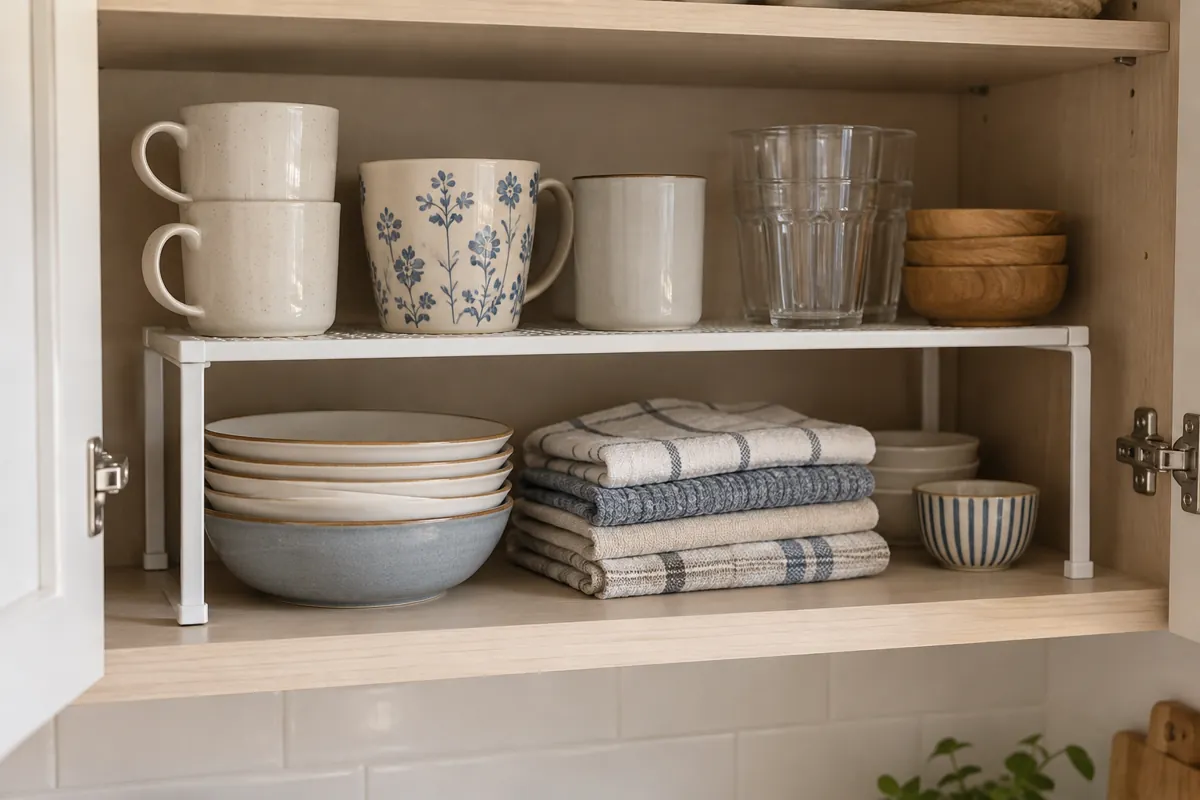
| Shelf insert | Best for: Extra levels inside an existing cabinet | Main check before use: Check dimensions, stability, clearance and the load limit. |
Reuse shelves and cabinets you already have
Add small containers to existing shelves so related items stay together. Label the front rather than stacking so many bins that you cannot see the contents. A cabinet shelf insert can create another level without fixing anything to the wall; check its stability and weight limit. Avoid interfering with pipes, appliances, or ventilation.
Try over-the-door storage
Measure the gap above the door and compare it with the hook thickness. Test that the door opens and closes freely without scraping. Keep the load within the organizer's rating and use it for lighter items such as scarves or toiletries if appropriate. Do not place it on a door where it interferes with latching or safe access.

Choose low, movable storage
A low basket, compact cart, or under-bed container can move with you. Measure the space with doors and drawers fully open, not just closed. On carts, use wheel locks where provided and avoid placing heavy items on top. Follow all stability and anchoring requirements for furniture; choose another option if those requirements cannot be met.
Use tension products only for their intended job
A tension rod can sometimes support lightweight items between compatible surfaces, but it is not a substitute for a fixed heavy-duty rail. Check the maker's installation guidance, span, surface requirements, and load limit. Do not hang heavy baskets from a lightweight rod or position one where falling items could injure someone.
Be selective with adhesive hooks
Check that your lease permits them and that the hook is compatible with the exact surface. Follow cleaning, application, waiting-time, weight, and removal instructions. Adhesives can damage paint or fail in humid conditions; avoid unsupported promises of damage-free removal. Do not use adhesive hooks to support fragile, valuable, or hazardous items overhead.
Use suction storage only on suitable surfaces
Some suction organizers are designed for smooth, nonporous surfaces. Grout lines, textured tile, and incompatible finishes can prevent a reliable seal. Follow the product instructions, keep the surface clean, and check attachment regularly. Store only suitable lightweight contents and keep breakable items somewhere more secure.
Avoid the tall-shelf workaround
A tall bookcase may require anchoring even if it stands on its own. Do not skip anchoring to satisfy a no-drill rule. Ask your landlord about an approved installation, or select a different storage method that can be used safely as designed. Also keep windows, heaters, exits, and access panels clear.
Make moving out easier
Keep installation and removal instructions with your rental paperwork. Take down removable fittings according to the maker's directions; pulling harder is not a substitute for the correct method. Before buying, ask whether the organizer could work in a different layout. Start with a basket, a measured cabinet insert, or under-bed storage if you want the least complicated change.