Make a daily-use zone
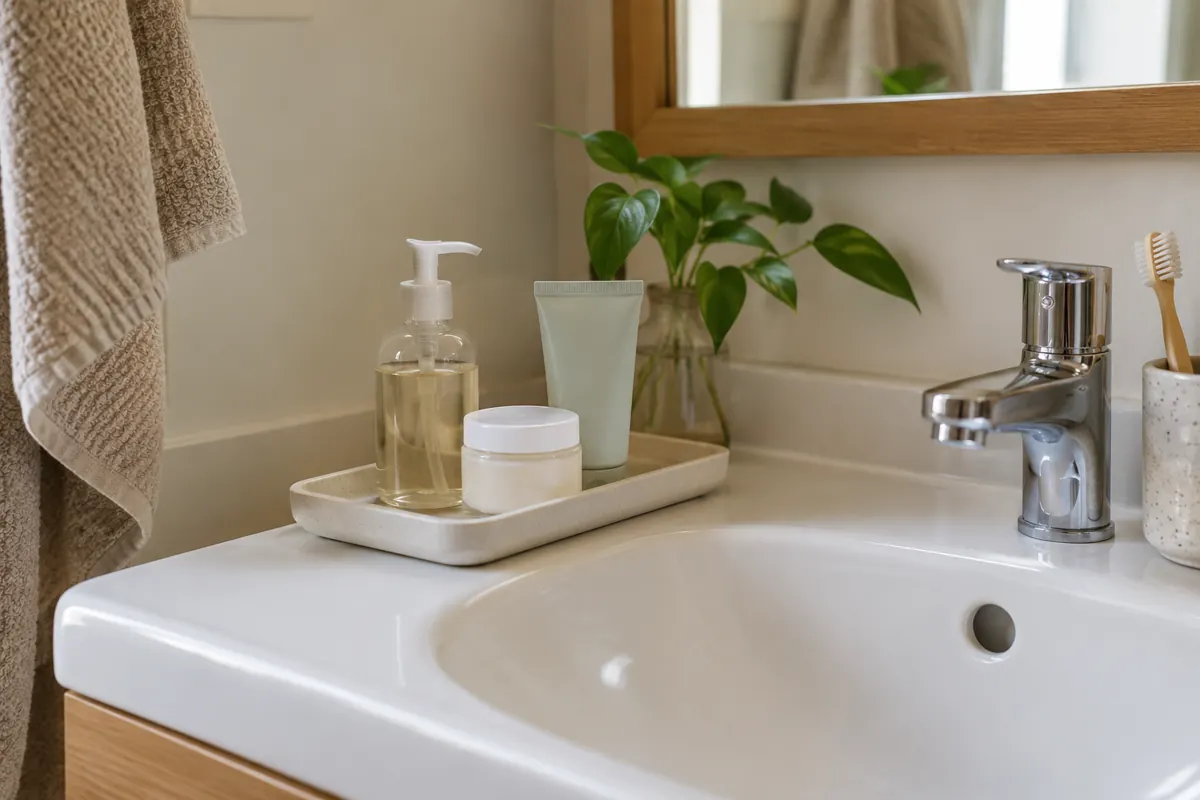
Choose a small washable tray or container for the products you use each morning and evening. Keep only those items on the counter or on an accessible shelf. A tray makes it easier to lift everything when cleaning, but it should not take up the whole sink surround. Store toothbrushes upright where they can air-dry, away from splash and cleaning products.
Before you buy bathroom storage
Check the space before choosing a container. Reusing a small tray or moving backups elsewhere may be enough.
- Measure usable cabinet width and depth, including the opening.
- Identify pipes and shutoff valves; leave them accessible.
- Check cabinet door and hinge clearance.
- Open room doors and drawers fully; keep walking space clear.
- Decide which items actually need to stay in the bathroom.
- Check rental restrictions before any permanent installation.
Work around under-sink plumbing
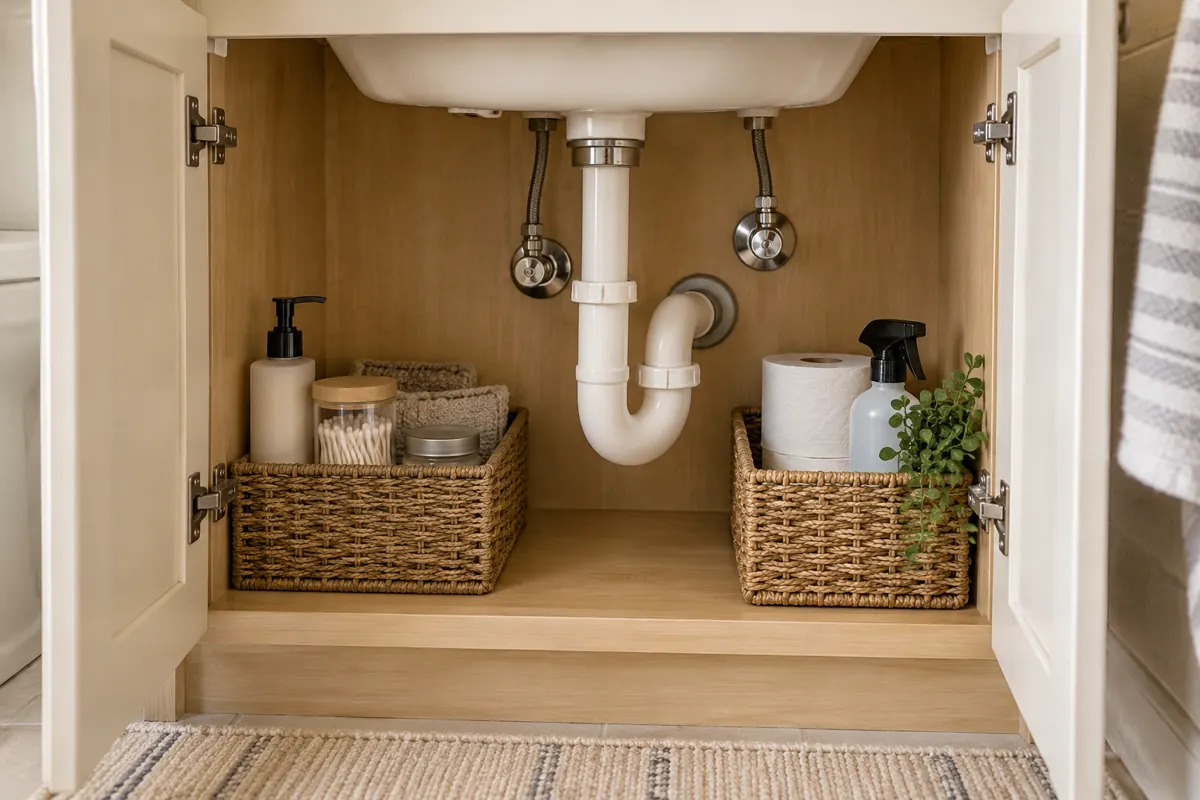
Measure the cabinet opening, usable depth, and the position of pipes and shutoff valves. Two small bins often fit awkward plumbing better than one large organizer. Use one for toiletries and another for cleaning supplies, separated appropriately. Keep valves reachable and do not place bins where they press against pipes.
- Check that cabinet doors close without hitting containers.
- Use a washable surface and check periodically for leaks.
- Keep hazardous cleaning products secured away from children and pets.
Use a slim movable cart only where it fits
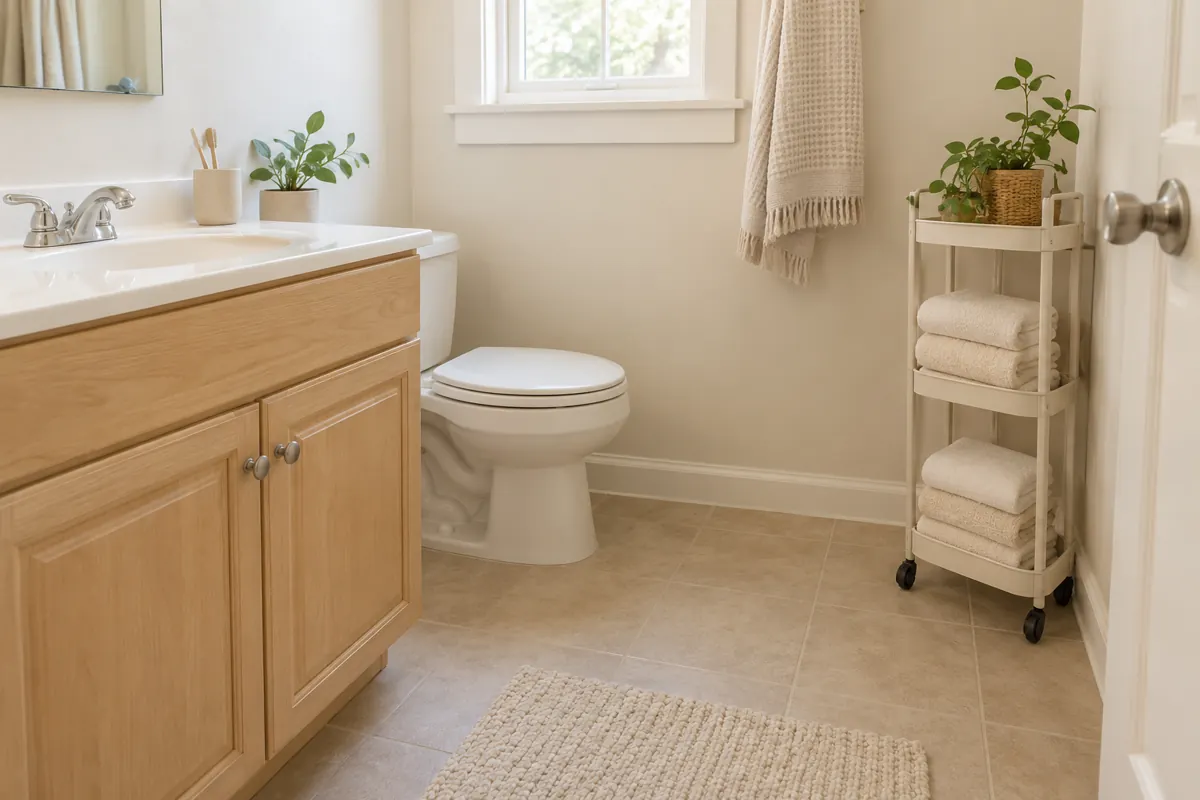
Measure the narrow space beside the sink or toilet and allow room to walk, clean, and open doors. A low cart can hold towels or extra toilet paper in a dry spot. If a cart blocks movement, a single small basket on an existing shelf is a better choice. Avoid storing paper directly on a damp floor.
Use the door carefully
An over-the-door rack can provide a place for towels if the hooks fit and the door closes normally. Space towels so they can dry between uses; do not layer several wet towels on one hook. Check the rack's weight limit and watch for rubbing against the frame. Suction or adhesive storage needs a compatible surface and should follow the maker's installation and removal instructions.
Separate backups from open products
Keep unopened soap, toothpaste, and similar supplies in one labeled container. Use older suitable items first and check expiry or disposal guidance where relevant. If the bathroom is humid or the cabinet is crowded, choose a dry storage spot elsewhere. Store medicines according to their labels rather than assuming the bathroom is suitable.
Share space with a container per person
In a shared bathroom, a small caddy for each person can prevent products from mixing together. Choose something washable and ventilated if it may get wet. Leave shared items in one agreed place. Avoid buying extra caddies until you have checked whether a container you already own fits the shelf.
Renter checks before you add storage
Read your lease and ask for permission where needed. A removable label does not guarantee damage-free removal on every wall finish. Avoid mounting storage on peeling paint or areas the product instructions exclude. Do not use tall, unstable shelving to avoid drilling: follow anchoring instructions, or choose a lower alternative that is suitable for the location.
Read the no-drill storage guide for surface and installation checks.
Your five-minute weekly reset
Return products to their zones, wipe the tray, remove empty bottles, and check for dampness under stored items. If the counter keeps filling up, reduce the daily-use group. Start with the space around the sink; one clear working surface can make the bathroom easier to use without adding furniture.