The 15-Minute Plan
- 0–2 min — Set up 4 destinations
- 2–8 min — Make one decision at a time
- 8–12 min — Restore the useful space
- 12–15 min — Close the loop
Keep · Relocate · Donate · Discard
Choose a space you can finish
Pick an area no bigger than you can empty and restore in a few minutes: a bedside drawer, the entry tray, or one bathroom shelf. Avoid an entire closet or every kitchen cabinet. Leave other areas closed for now. If your chosen space looks too full, halve it before starting. A timer is a stopping point, not a demand to make rushed decisions.
Minutes 0–2: set up four destinations
Bring a small bag for discard items and two containers you already own for relocate and donate items. Keep items can stay within the area you are organizing. Do not spread everything across your bed or the floor. Work on one safe surface and keep the route through the room clear.
- Keep: useful items that belong in this exact space.
- Relocate: things you need, but that have a better home elsewhere.
- Donate: suitable items in usable condition that you have decided to give away.
- Discard: items that cannot be used or donated; sort recycling and special disposal separately.
Minutes 2–8: make one decision at a time
Pick up one item and give it a destination. Ask whether you use it, whether you need it, and whether this is the place you look for it. Put duplicates together so you can see how many you have. You do not need a universal rule about keeping only one of everything; keep the quantity your household actually uses. Do not walk around the apartment returning each stray object yet—that turns one small task into several unfinished ones.
Keep the “maybe” pile small
For an item you cannot decide about, use one small holding container with a specific review date. Write a brief note about the question you need to answer, such as whether an unfamiliar cable fits a device you still own. Keep essential documents, medication, and borrowed or shared possessions out of snap decisions. Ask the owner before donating someone else’s things. If the maybe box is full, review it before creating a second one.
Minutes 8–12: restore the useful space
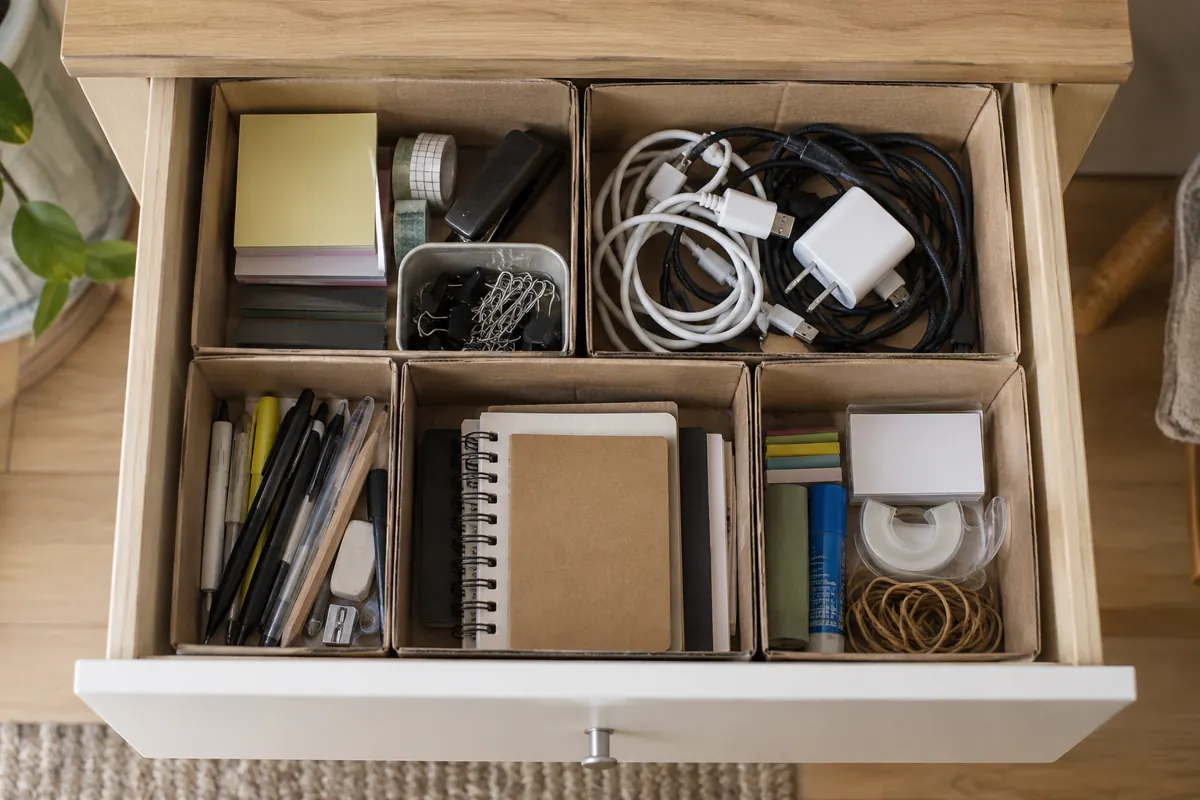
Wipe the empty surface if needed, then return only the keep items. Put the things used most often nearest the opening. Reuse a shallow box to separate small items if it helps, but do not pause to shop. Leave enough room to remove an item without disturbing the rest. If everything will not fit comfortably, make another decision or choose a better home; pressing a drawer shut does not finish the job.
Minutes 12–15: close the loop
Take the relocate container on one short trip to return items to their known homes. Put donations in a designated spot that does not block an exit and choose a realistic drop-off or collection date. Remove ordinary trash and recycling appropriately. Set aside batteries, electronics, chemicals, or sensitive papers for their appropriate disposal process. If time is up and some decisions remain, keep them contained and schedule another short session rather than emptying a new drawer.
Simple rules for small apartments
Give everyday items a reachable home and keep shared surfaces usable. Use the size of an existing drawer or shelf as a practical limit rather than buying more storage immediately. Keep one departure spot for donations and returns, and clear it regularly. A basket can contain clutter, but it only helps if you know what belongs in it and when it gets emptied.
Your short reset checklist
At the end of 15 minutes, check these four things.
- The chosen drawer, shelf, or surface is usable again.
- Keep items are back in their homes.
- Relocate, donate, and special-disposal items have a clear next step.
- No new piles block the room or the route to the door.
Repeat where the friction returns
Try the same small area again when it starts to overflow. Notice what keeps landing there: it may need a more convenient home, not a stricter routine. Choose another area only after the first is reset. The useful result is one less daily annoyance and a method you can repeat, not a perfectly organized apartment in one afternoon.
Once you have cleared space, explore affordable apartment storage.